Guide
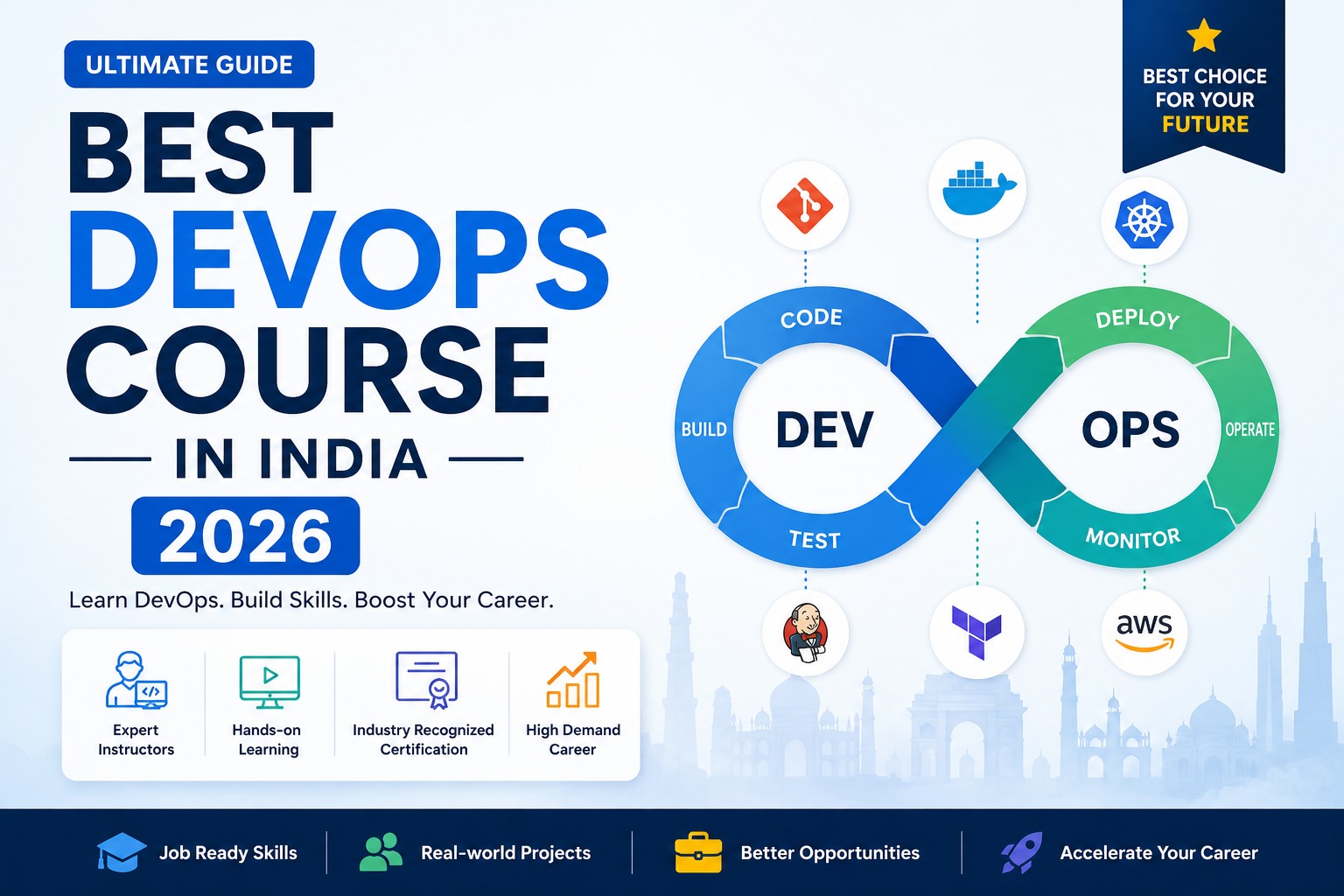
The 2026 Guide to DevOps Training in Bangalore: Which Area Should You Choose?
 By ShiftToTech Academy
Published
Bangalore DevOps Guide · 2026
The 2026 Guide to DevOps Training in Bangalore: Which Area Should You Choose?
If you are looking for a tech job in Bangalore right now, you already know the market has shifted. Companies aren't just hiring people to write code — they are aggressively hiring people who know how to deploy, scale, and secure that code. DevOps, Site Reliability Engineering (SRE), and Platform Engineering are where the premium salaries are sitting in 2026.
But here is the thing about learning DevOps in Bangalore: where you take your training matters almost as much as what you learn. Bangalore is massive, and different neighbourhoods cater to entirely different tech ecosystems. Let's break down the best areas for DevOps training in Bangalore, what each micro-market offers, and how to choose the right fit for your career goals.
Jump to: Koramangala Whitefield BTM / Marathahalli Tech Stack Salaries
1. Koramangala & HSR Layout
Startup & Unicorn Hub
If your goal is to work for a fast-paced unicorn — think Swiggy, CRED, Razorpay — or a well-funded SaaS startup, this is where you want to be.
The Vibe
These areas are packed with tech meetups, weekend hackathons, and founders looking for talent. The networking opportunities here are unmatched. You can finish your Saturday class and walk into a tech mixer down the street.
What You'll Learn
Training here focuses heavily on modern, agile cloud stacks. Expect deep dives into AWS, Docker, Kubernetes, and GitHub Actions. Startups care about shipping features fast, so the curriculum is usually very hands-on and cloud-native.
Best For
Working professionals looking to pivot into cloud roles, or freshers who want to jump straight into the startup grind.
See our dedicated DevOps training for Koramangala professionals page for area-specific details, salary data, and batch timings.
2. Whitefield & Bellandur (ORR)
Enterprise Domain
Whitefield and the Outer Ring Road (ORR) stretch are the heavyweight corporate zones — global giants, major banks, and massive IT service providers.
The Vibe
Corporate, structured, and massive scale.
What You'll Learn
DevOps at an MNC looks different than at a startup. It is about compliance, security, and managing massive legacy systems alongside the cloud. Institutes here often focus on Azure DevOps, Jenkins, Terraform, and DevSecOps. They prep you for the strict, multi-round technical interviews of tier-1 companies.
Best For
Professionals looking for long-term job stability, excellent corporate benefits, and roles that involve enterprise-scale infrastructure.
See our dedicated DevOps training for Whitefield IT professionals page for enterprise-specific curriculum and salary ranges.
3. BTM Layout & Marathahalli
Student Capitals
If you are a recent graduate moving to Bangalore, chances are you are looking for accommodation in either BTM Layout or Marathahalli. These two areas have the highest density of IT training institutes in the country.
The Vibe
Highly competitive, budget-friendly, and packed with job-seekers.
What You'll Learn
Institutes here offer comprehensive, ground-up bootcamps. They take you from basic Linux commands all the way to advanced cluster management. Because of the sheer volume of students, these centres usually have dedicated placement cells, tie-ups with consultancies, and regular campus recruitment drives.
Best For
Freshers, candidates with career gaps, and those on a strict budget who need a structured path from zero to job-ready.
The 2026 DevOps Tech Stack: What Your Course MUST Cover
It is easy to get overwhelmed by the sheer number of DevOps tools out there. Don't fall for institutes that promise to teach you 40 different tools in two months — that is just theory. You need hands-on project experience. If you are evaluating a syllabus this year, ensure it heavily emphasises these core pillars:
The Absolute Basics
Linux administration and Bash/Shell scripting. If you cannot navigate a terminal blindly, the rest does not matter.
Linux Bash Scripting Shell
Infrastructure as Code (IaC)
Terraform is the industry standard. You need to know how to provision cloud resources using code, not by clicking through a web console.
Terraform Ansible
Containerisation & Orchestration
Docker to build containers, and Kubernetes to manage them. Kubernetes is practically mandatory if you want to negotiate for mid-to-senior level salaries.
Docker Kubernetes Helm
CI/CD Pipelines
Jenkins is still heavily used in enterprises, but GitHub Actions and GitLab CI are dominating newer projects.
Jenkins GitHub Actions GitLab CI
Cloud Platforms
AWS is still king, but Azure has closed the gap significantly in the enterprise sector. Make sure your course gives you actual sandbox access to build on a real cloud platform.
AWS Azure GCP
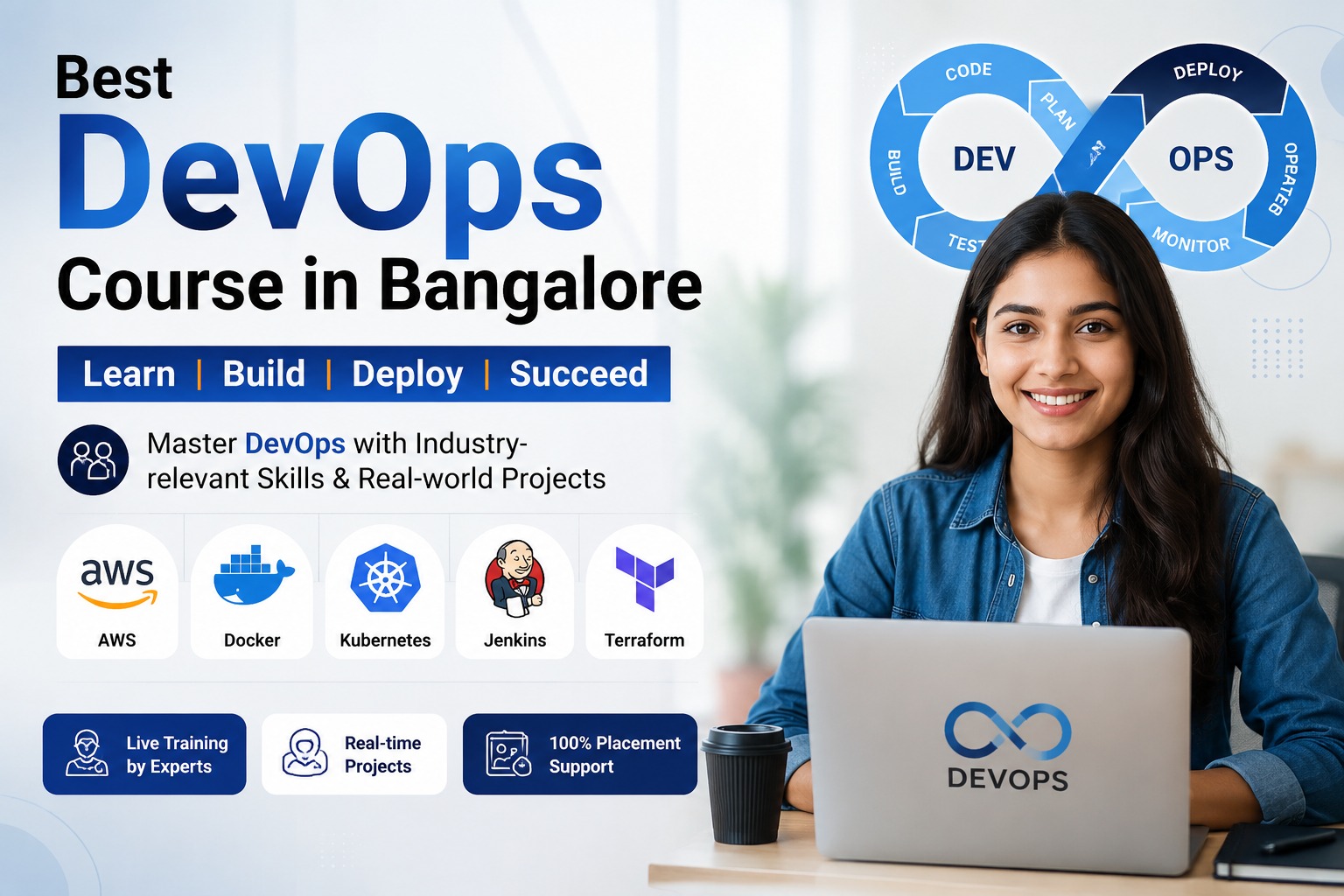
Our DevOps course in Bangalore covers all of the above with real AWS deployments, not classroom simulations.
Bangalore Salary Reality Check (2026 Data)
What is the ROI on spending a few months learning this? Good DevOps engineers are incredibly hard to find, and companies pay a premium for them. Here is a realistic look at current DevOps salaries in the city:
| Experience | Role | Salary Range (LPA) |
|---|---|---|
| 0 – 1 Year | Junior DevOps Engineer | ₹5 – ₹8 LPA |
| 2 – 4 Years | DevOps / Cloud Engineer | ₹12 – ₹20 LPA |
| 5+ Years | Sr. DevOps / Platform Eng | ₹25 – ₹45 LPA+ |
Pro Tip
Getting a recognised certification — like the AWS Certified DevOps Engineer or the Certified Kubernetes Administrator (CKA) — is the fastest way to push your resume past the HR screen and toward the higher end of those salary brackets.
Final Thoughts: Making Your Choice
Don't just pick the institute that is closest to your apartment, and definitely don't hand over your money just because someone promises a "placement support."
Take a weekend, attend a few free demo classes across BTM, Koramangala, or Whitefield. Talk to the trainers — are they just reading from PowerPoint slides, or are they working professionals showing you real-world deployments? Choose a place where you will actually write code, break servers, and learn how to fix them.
Ready to start your DevOps journey in Bangalore? Check out our main Bangalore DevOps course page to see what a real, project-based curriculum looks like — including batch timings, fees, and a free demo class option.
Frequently Asked Questions
Q: Which area in Bangalore is best for DevOps training?
A: It depends on your career goal. Koramangala and HSR Layout are best if you want startup/unicorn roles at companies like Swiggy, CRED, or Razorpay. Whitefield and the ORR corridor are ideal if you're targeting MNCs like SAP Labs, IBM, or Walmart Labs. BTM Layout and Marathahalli have the highest density of training institutes and are well-suited for freshers on a budget.
Q: What is the average DevOps engineer salary in Bangalore in 2026?
A: Entry-level DevOps engineers in Bangalore earn ₹5–8 LPA. Mid-level engineers with 2–4 years of experience earn ₹12–20 LPA. Senior DevOps and Platform Engineers with 5+ years command ₹25–45 LPA or more, especially at product companies and unicorns.
Q: What tools must a good DevOps course in Bangalore cover?
A: Any serious DevOps course in Bangalore must cover: Linux and Bash scripting, Git and version control, Docker and Kubernetes, Jenkins and GitHub Actions for CI/CD, Terraform for Infrastructure as Code, and AWS (or Azure) with hands-on cloud access. Courses that only teach theory without real deployments are not worth your time.
Q: Is online DevOps training better than offline in Bangalore?
A: For many working professionals, yes. Bangalore's traffic means commuting to an offline institute can cost you 2–3 hours per day. Live online training with a small batch (10 or fewer students) gives you the same hands-on lab experience and direct interaction with the trainer — without wasting time on the ORR or Hosur Road. The key is 'live' online, not pre-recorded videos.
Share this article: Twitter LinkedIn Facebook
Ready to Start Your DevOps Career?
Join our comprehensive DevOps course and get job-ready in 70 days