Cloud Computing MCQ Questions with Answers 2026
25 Cloud Computing multiple-choice questions with answers and explanations — plus the full 100+ question set as a free PDF on request.
Published 5 January 2026 · Updated 15 October 2026
 By ShiftToTech Academy
Published

Cloud Computing MCQ - Test Your Knowledge
Practice Cloud Computing MCQ questions with answers for exam preparation, interviews, and certification tests. Covers AWS, Azure, GCP, cloud fundamentals, deployment models, and security.
Topics Covered:
Cloud Computing Basics
IaaS, PaaS, SaaS
AWS Services (EC2, S3, Lambda)
Azure & Google Cloud
Cloud Security
Virtualization
Start Practice: Free 100+ MCQ questions below!
Sample Cloud Computing MCQs
Q1. What does IaaS stand for?
a) Internet as a Service
b) Infrastructure as a Service
c) Integration as a Service
d) Information as a Service
Answer: b) Infrastructure as a Service
Explanation: IaaS provides virtualized computing resources over the internet, including servers, storage, and networking.
Q2. Which is a public cloud provider?
a) AWS
b) Private cloud
c) Hybrid cloud
d) None
Answer: a) AWS
Explanation: Amazon Web Services (AWS) is one of the largest public cloud providers, offering computing resources to the general public over the internet.
Q3. What does PaaS provide?
a) Only hardware infrastructure
b) Platform for developing, testing, and deploying applications
c) Only software applications
d) Only storage services
Answer: b) Platform for developing, testing, and deploying applications
Explanation: Platform as a Service (PaaS) provides a complete development and deployment environment in the cloud.
Q4. Which AWS service is used for object storage?
a) EC2
b) RDS
c) S3
d) Lambda
Answer: c) S3
Explanation: Amazon S3 (Simple Storage Service) is an object storage service offering scalability, data availability, security, and performance.
Q5. What is the main benefit of cloud computing?
a) Requires large upfront investment
b) Pay-as-you-go pricing and scalability
c) Limited accessibility
d) Requires physical hardware maintenance
Answer: b) Pay-as-you-go pricing and scalability
Explanation: Cloud computing offers flexible pricing models and the ability to scale resources up or down based on demand.
Q6. Which deployment model combines public and private cloud?
a) Public cloud
b) Private cloud
c) Hybrid cloud
d) Community cloud
Answer: c) Hybrid cloud
Explanation: Hybrid cloud combines public and private cloud environments, allowing data and applications to be shared between them.
Q7. What does SaaS stand for?
a) Storage as a Service
b) Software as a Service
c) Security as a Service
d) Server as a Service
Answer: b) Software as a Service
Explanation: SaaS delivers software applications over the internet on a subscription basis, eliminating the need for installation and maintenance.
Q8. Which service provides serverless computing in AWS?
a) EC2
b) Lambda
c) S3
d) VPC
Answer: b) Lambda
Explanation: AWS Lambda is a serverless compute service that runs code in response to events without provisioning or managing servers.
Q9. What is virtualization in cloud computing?
a) Creating virtual versions of physical resources
b) Physical server management
c) Network security protocol
d) Data encryption method
Answer: a) Creating virtual versions of physical resources
Explanation: Virtualization allows multiple virtual machines to run on a single physical machine, maximizing resource utilization.
Q10. Which cloud provider offers Azure?
a) Amazon
b) Microsoft
c) Google
d) IBM
Answer: b) Microsoft
Explanation: Microsoft Azure is Microsoft's cloud computing platform offering IaaS, PaaS, and SaaS services.
Cloud Security MCQs
Q11. Under the shared responsibility model, who secures the physical data centre?
a) The customer
b) The cloud provider
c) Both equally
d) A third-party auditor
Answer: b) The cloud provider
Explanation: Providers secure the cloud itself - hardware, facilities, networking. Customers secure what they put in it: data, access control, OS patching and configuration.
Q12. Which AWS service controls who can access which resources?
a) CloudWatch
b) IAM
c) CloudTrail
d) Config
Answer: b) IAM
Explanation: IAM (Identity and Access Management) defines users, roles and policies. CloudTrail records who did what; CloudWatch monitors metrics; Config tracks resource state.
Q13. What does "encryption at rest" protect?
a) Data moving across the network
b) Data stored on disk or in a database
c) Data held in RAM
d) Data in transit between regions
Answer: b) Data stored on disk or in a database
Explanation: At rest means stored data. Data moving over a network is protected by encryption in transit, usually TLS.
Q14. Which is the principle of giving users only the permissions they need?
a) Defence in depth
b) Least privilege
c) Zero trust
d) Separation of duties
Answer: b) Least privilege
Explanation: Least privilege grants the minimum access required for a task. It limits the blast radius when credentials leak.
AWS Services MCQs
Q15. Which AWS service provides resizable virtual servers?
a) S3
b) EC2
c) RDS
d) Lambda
Answer: b) EC2
Explanation: EC2 (Elastic Compute Cloud) provides virtual machines. S3 is object storage, RDS is managed databases, Lambda runs code without servers.
Q16. Which AWS service is a managed relational database?
a) DynamoDB
b) RDS
c) Redshift
d) ElastiCache
Answer: b) RDS
Explanation: RDS manages engines such as MySQL, PostgreSQL and SQL Server. DynamoDB is NoSQL, Redshift is a data warehouse, ElastiCache is in-memory caching.
Q17. Which AWS service is a content delivery network?
a) Route 53
b) CloudFront
c) API Gateway
d) Global Accelerator
Answer: b) CloudFront
Explanation: CloudFront caches content at edge locations near users. Route 53 is DNS; API Gateway fronts APIs.
Q18. What is a VPC in AWS?
a) A virtual private cloud - a logically isolated network
b) A physical private cage in a data centre
c) A VPN client
d) A billing container
Answer: a) A virtual private cloud - a logically isolated network
Explanation: A VPC is your own isolated section of the AWS network, where you control subnets, route tables and gateways.
Cloud Architecture MCQs
Q19. What does an Availability Zone represent?
a) A country
b) One or more isolated data centres within a region
c) A single physical server rack
d) A billing region
Answer: b) One or more isolated data centres within a region
Explanation: A region contains multiple Availability Zones. Spreading workloads across AZs is how you survive the loss of one data centre.
Q20. What is vertical scaling?
a) Adding more instances
b) Increasing the size of a single instance
c) Moving to another region
d) Adding a load balancer
Answer: b) Increasing the size of a single instance
Explanation: Vertical scaling (scaling up) makes one machine bigger. Horizontal scaling (scaling out) adds more machines, and is generally preferred in the cloud.
Q21. What does a load balancer primarily do?
a) Encrypt traffic
b) Distribute incoming traffic across multiple targets
c) Store session data
d) Compress responses
Answer: b) Distribute incoming traffic across multiple targets
Explanation: It spreads requests across healthy instances, which both improves throughput and removes any single instance as a point of failure.
Q22. What is the difference between elasticity and scalability?
a) They are identical
b) Elasticity adds and removes capacity automatically with demand; scalability is the ability to grow
c) Elasticity is manual; scalability is automatic
d) Elasticity applies only to storage
Answer: b) Elasticity adds and removes capacity automatically with demand; scalability is the ability to grow
Explanation: Scalability is the capacity to handle growth. Elasticity is doing it automatically in both directions, which is what makes pay-as-you-go economical.
Deployment Model MCQs
Q23. Which deployment model is used exclusively by a single organisation?
a) Public cloud
b) Private cloud
c) Community cloud
d) Hybrid cloud
Answer: b) Private cloud
Explanation: A private cloud serves one organisation, on-premise or hosted. Community cloud is shared by organisations with common requirements, such as regulated sectors.
Q24. Cloud computing shifts IT spending from which model to which?
a) OpEx to CapEx
b) CapEx to OpEx
c) CapEx to depreciation
d) OpEx to amortisation
Answer: b) CapEx to OpEx
Explanation: Instead of buying hardware up front (capital expenditure) you pay for consumption (operating expenditure). This is why cloud suits startups with limited capital.
Q25. Which is NOT one of the five essential characteristics of cloud computing in the NIST definition?
a) On-demand self-service
b) Rapid elasticity
c) Manual provisioning by an administrator
d) Measured service
Answer: c) Manual provisioning by an administrator
Explanation: NIST lists on-demand self-service, broad network access, resource pooling, rapid elasticity and measured service. Needing an administrator to provision resources is the opposite of self-service.
More Cloud Computing MCQ Topics
Cloud Security
- • IAM (Identity and Access Management)
- • Encryption methods
- • Security groups and firewalls
- • Compliance and governance
AWS Services
- • EC2 (Elastic Compute Cloud)
- • S3 (Simple Storage Service)
- • RDS (Relational Database Service)
- • Lambda (Serverless)
Cloud Architecture
- • Load balancing
- • Auto-scaling
- • High availability
- • Disaster recovery
Deployment Models
- • Public cloud
- • Private cloud
- • Hybrid cloud
- • Community cloud
Benefits of Practicing Cloud Computing MCQs
- Exam Preparation: Perfect for AWS, Azure, GCP certification exams
- Interview Success: Common questions asked in cloud engineer interviews
- Concept Clarity: Reinforces understanding of cloud fundamentals
- Quick Revision: Fast way to review key cloud computing concepts
- Self-Assessment: Identify knowledge gaps and areas for improvement
Want to Master Cloud Computing?
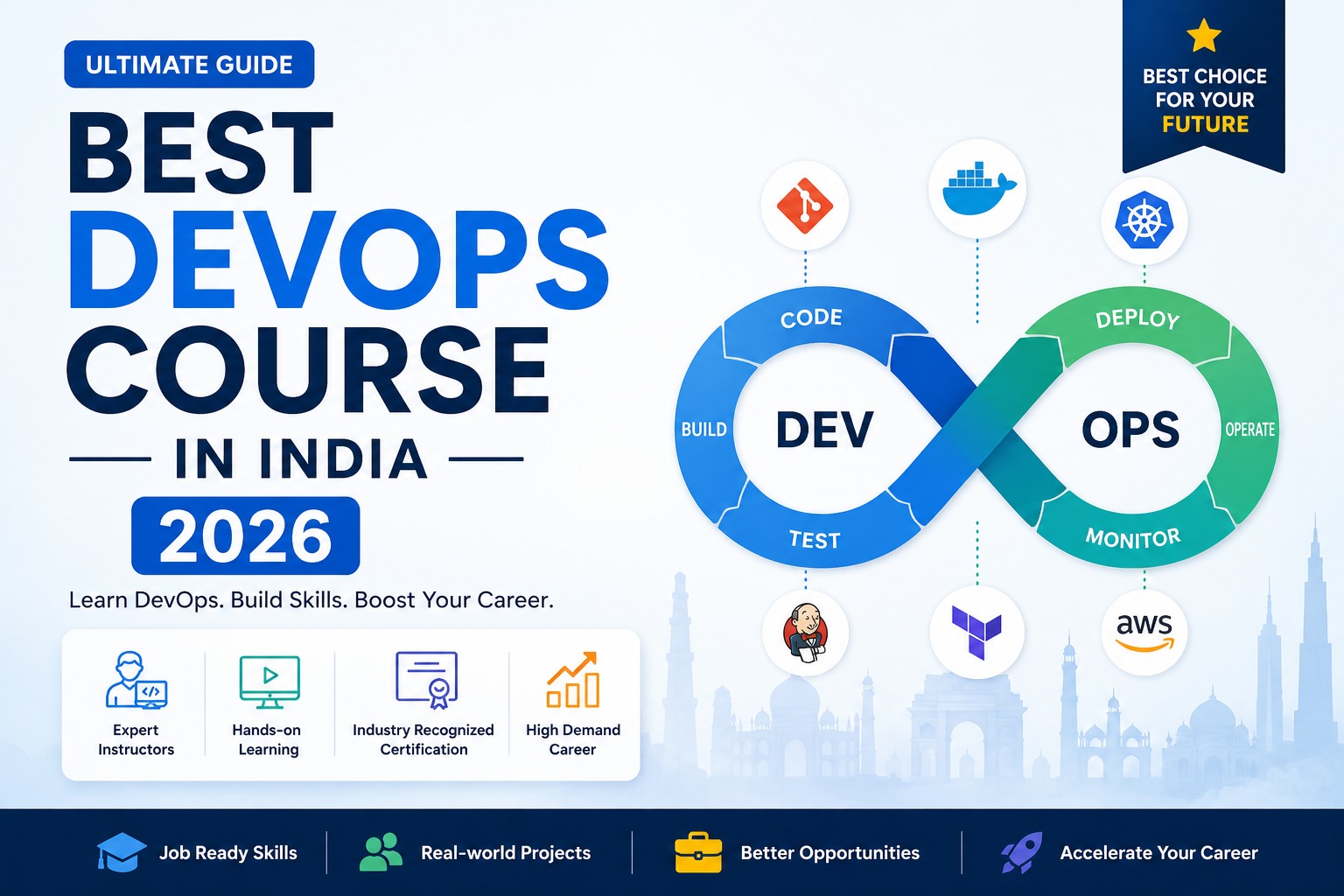
While MCQs are great for testing knowledge, hands-on practice is essential for mastering cloud computing. Our DevOps course covers AWS, Azure, Docker, Kubernetes, and all essential cloud technologies with real-world projects.
Looking for comprehensive training? Check out our DevOps Course Online 2026 for complete cloud and DevOps mastery. If you're interested in AI/ML with cloud integration, explore our AI/ML Course Online 2026.
Learn Cloud Computing with DevOps Course
- AWS, Azure, GCP hands-on training
- Docker & Kubernetes mastery
- Infrastructure as Code (Terraform)
- CI/CD pipelines with Jenkins
- placement support
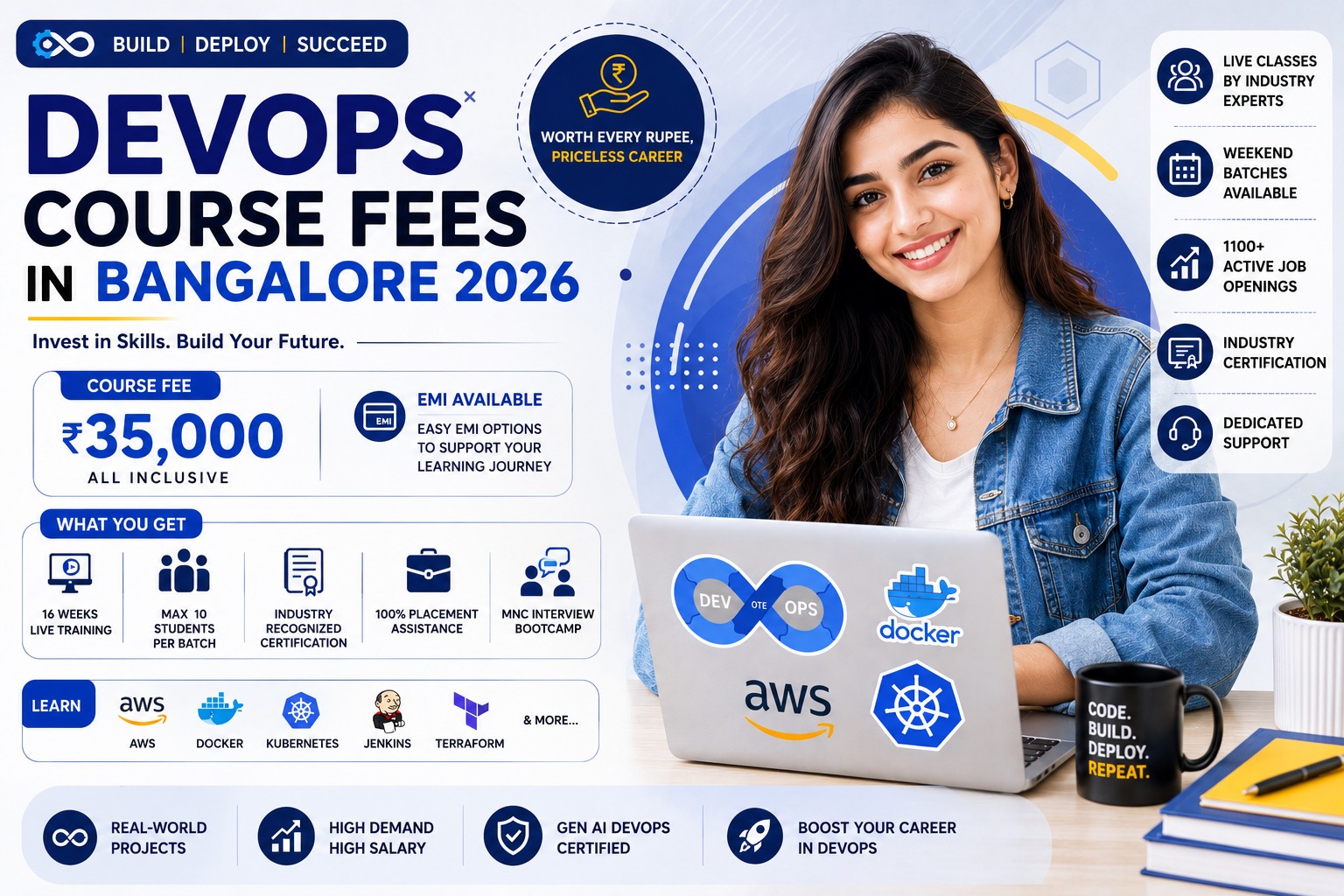
- Weekend batches available
Download Full 100+ MCQ PDF
Want access to all 100+ Cloud Computing MCQ questions with detailed explanations? Contact us to get the complete PDF guide for free!
Ready to Master Cloud Computing?
Join our DevOps course and learn AWS, Azure, Docker, Kubernetes with hands-on projects!
If you are revising these for an exam, the concepts behind them are the same ones used in production: the DevOps course covers them hands-on, and the AWS DevOps track goes deeper on the cloud side. Worth a look once the exam is out of the way.
© 2026 ShifttoTech Academy
Keywords: Cloud Computing MCQ, Cloud Computing Multiple Choice Questions, AWS MCQ, Cloud Computing Quiz, Cloud Computing Interview Questions MCQ